
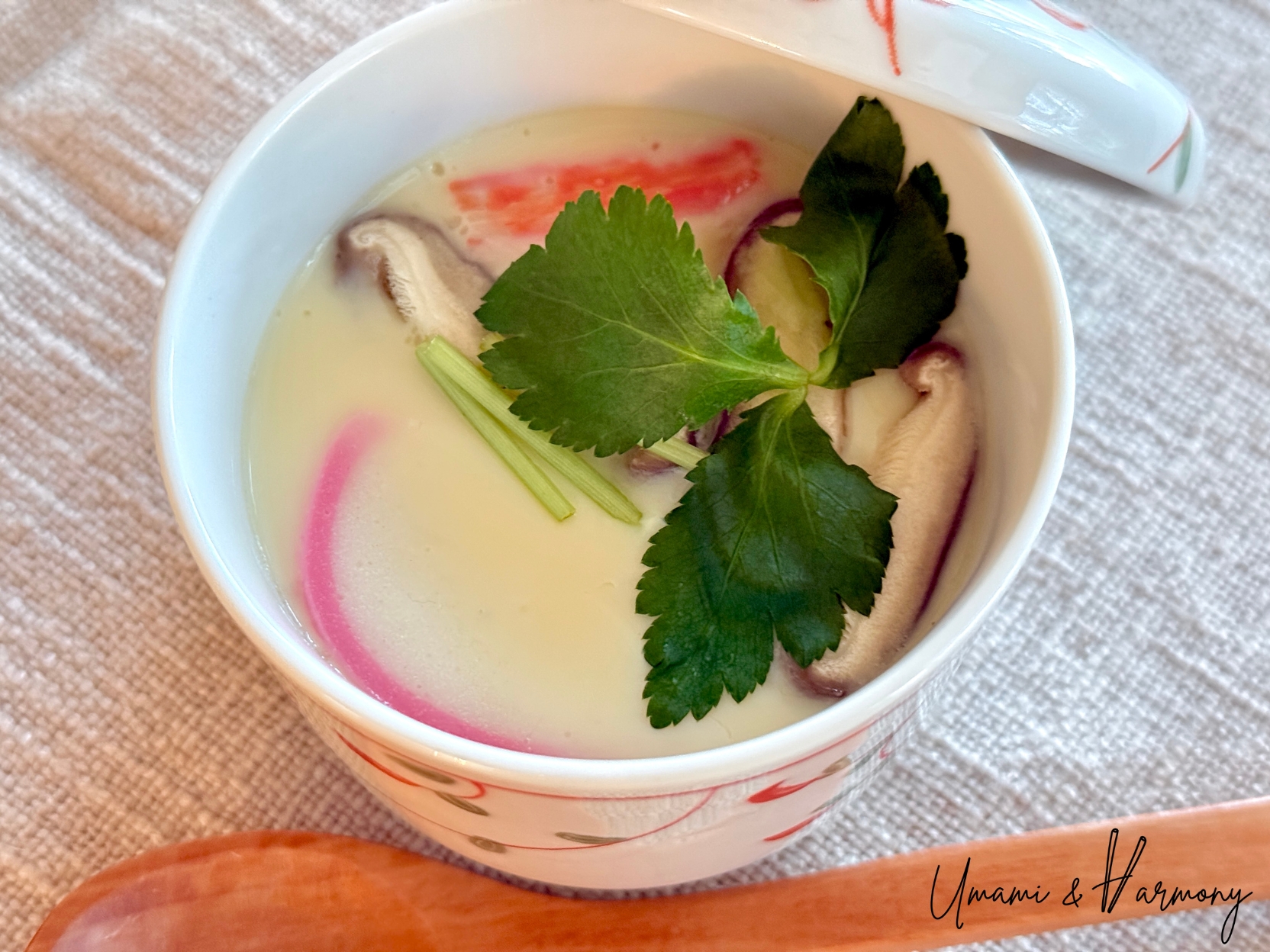
Chawanmushi (Japanese Savory Egg Custard) is a comforting Japanese dish that I’ve loved since I was a child. It’s soft, delicate, and filled with a variety of ingredients hidden inside, which makes every bite a little surprise. Even now, I still crave it often. There are endless variations depending on what you have on hand, but this recipe is a classic, simple version that’s easy to make at home. My son is always curious about what’s inside each time he eats it, which makes it even more fun to serve and enjoy together.
Ingredients
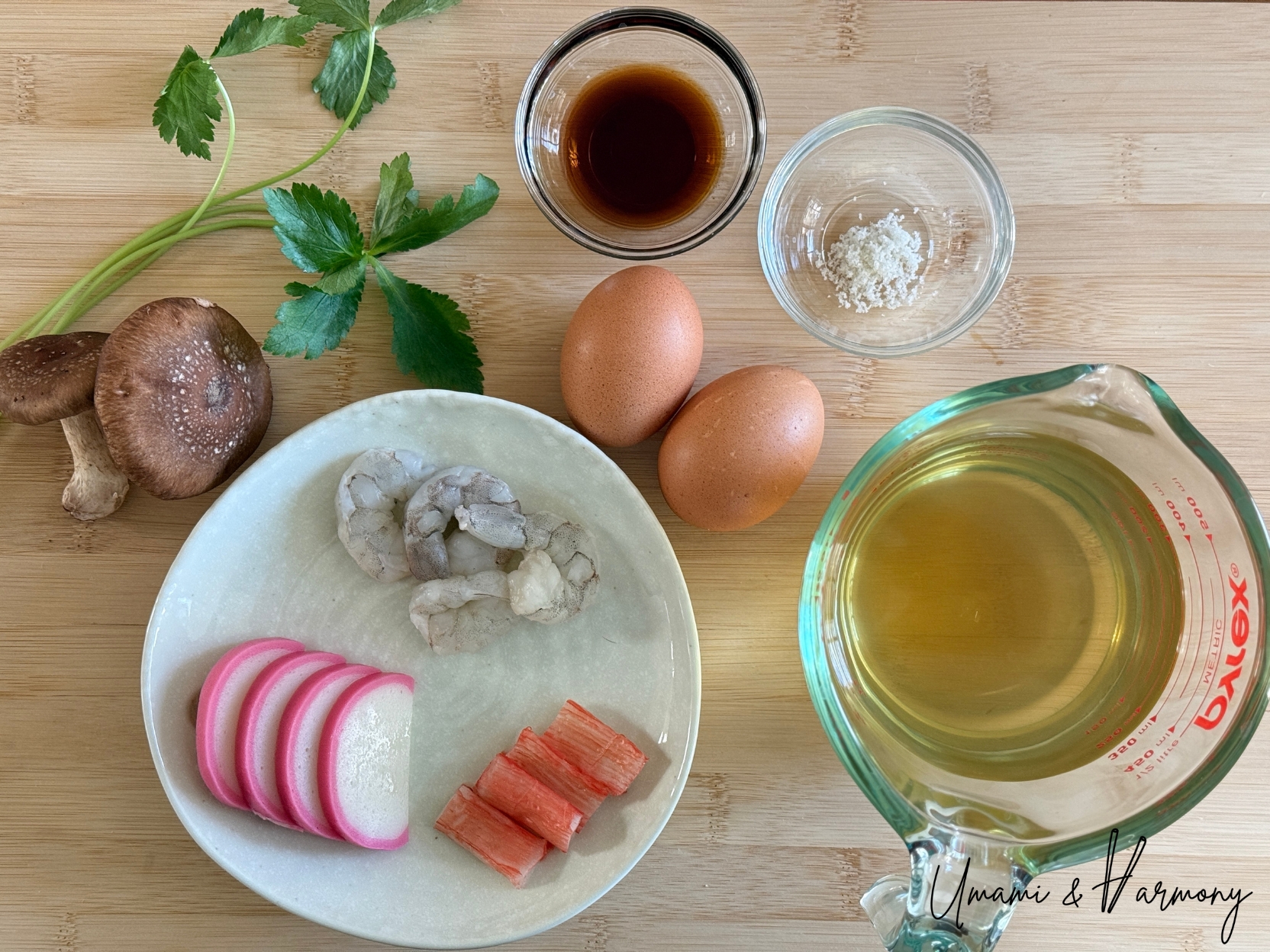
(Serves 4, using 150ml cups)
- Eggs: 2
- Dashi broth: 360 ml (1½ cups)
- Light soy sauce: 2 teaspoon (or regular soy sauce)
- Sea salt: ¼ tsp
- Medium raw shrimp: 4
- Imitation crab sticks: 4 (1-inch pieces)
- Kamaboko: 4 slices (3mm slices)
- Shiitake mushrooms: 2
For garnish
- Mitsuba (Japanese herb): as needed
Step-By-Step Instructions
1. Prepare the egg mixture
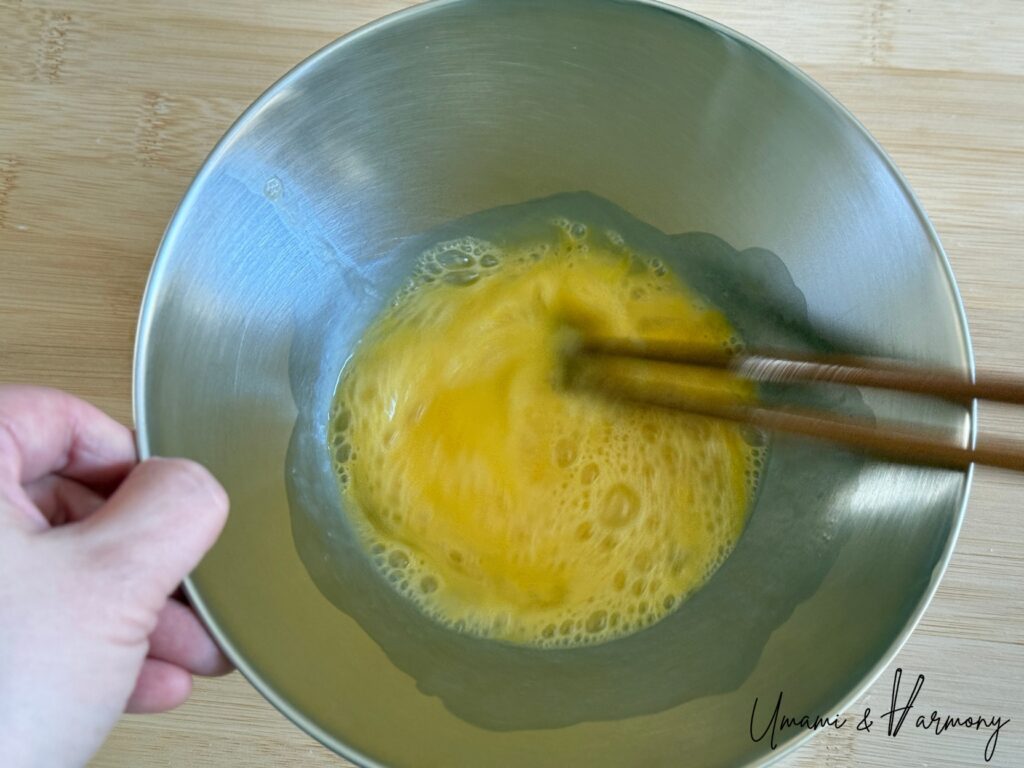
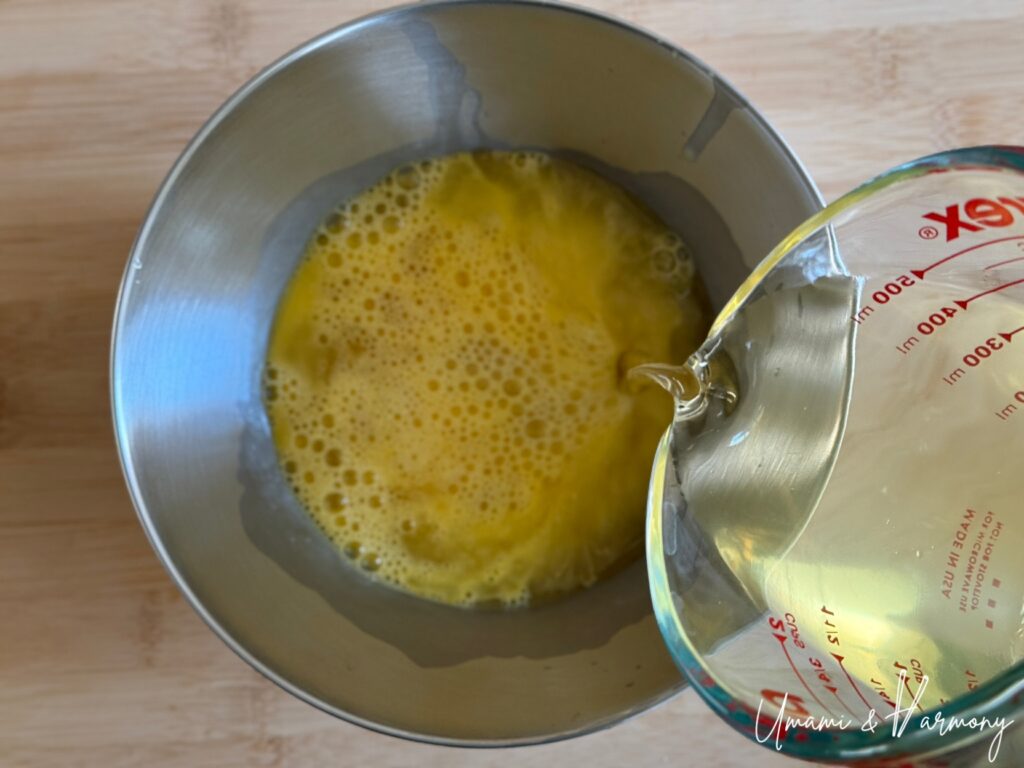
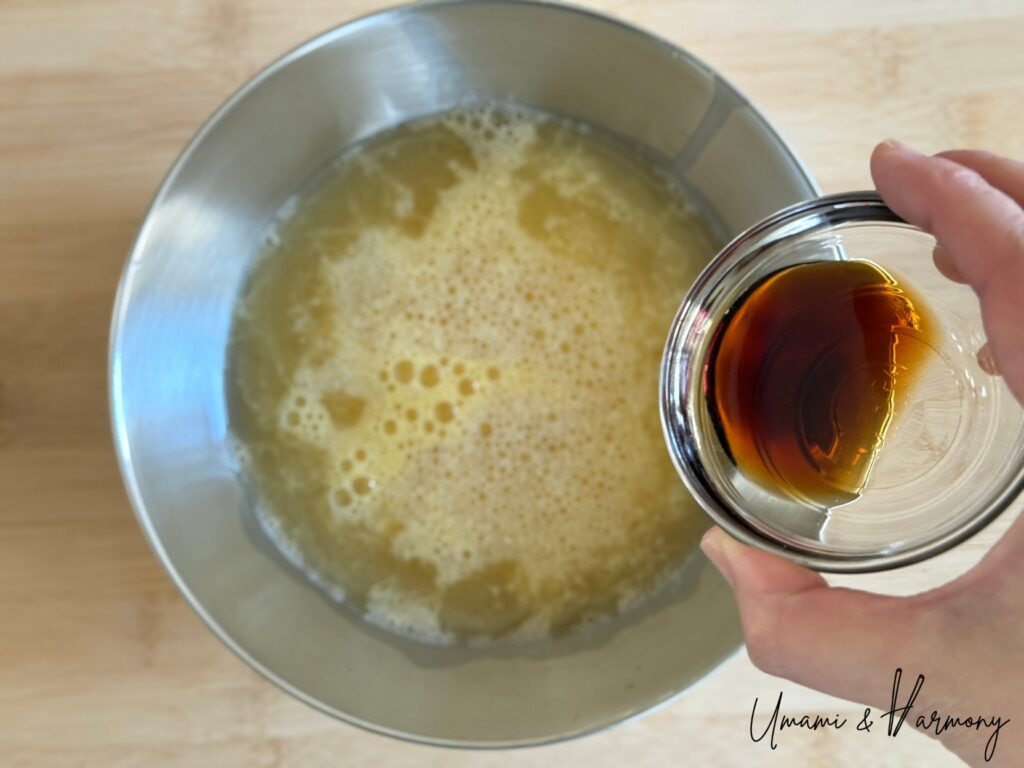
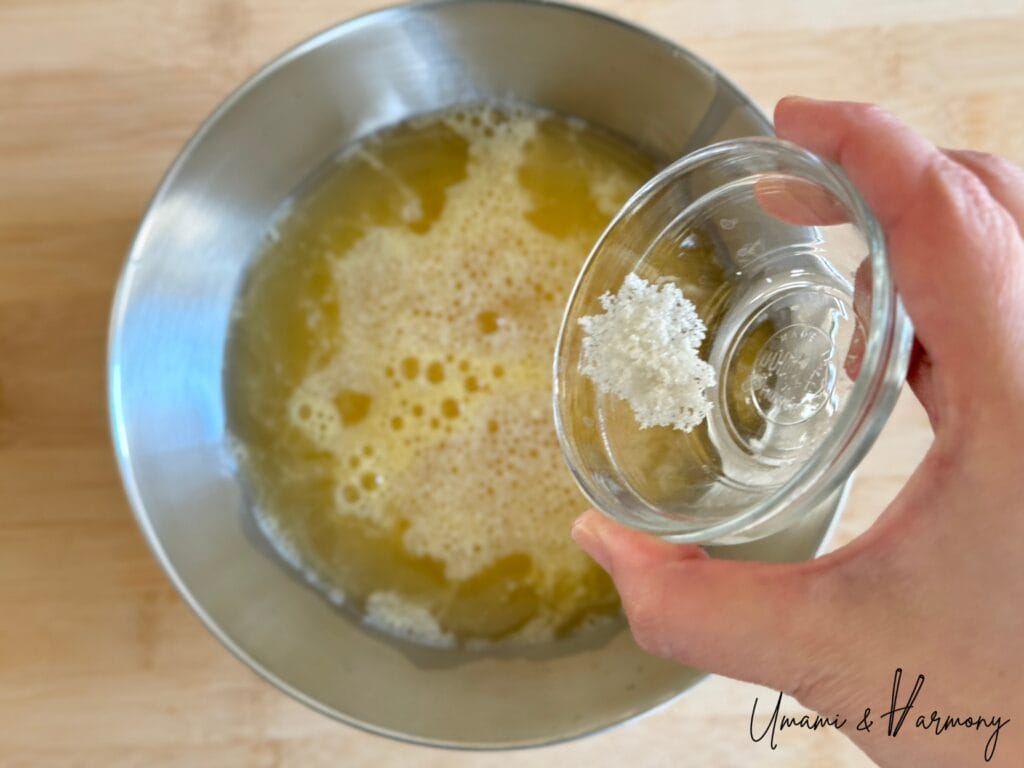
Crack the eggs into a bowl and gently beat until well combined. Add the dashi broth, then mix until evenly combined. Stir in the light soy sauce and sea salt.
2. Strain the mixture
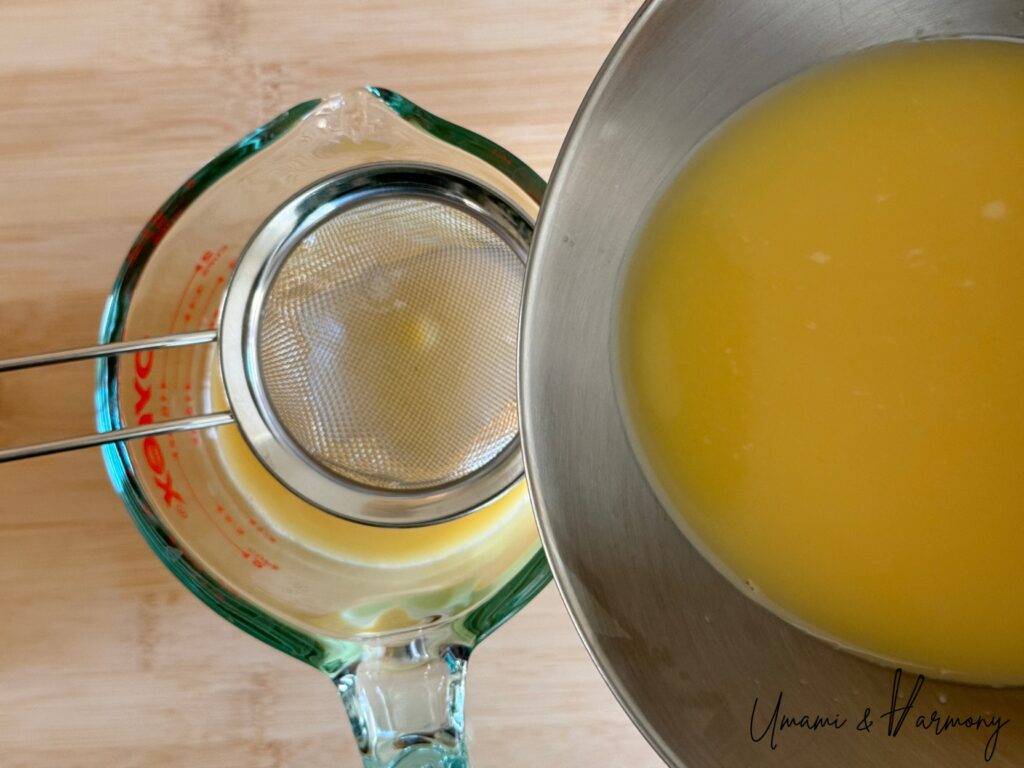
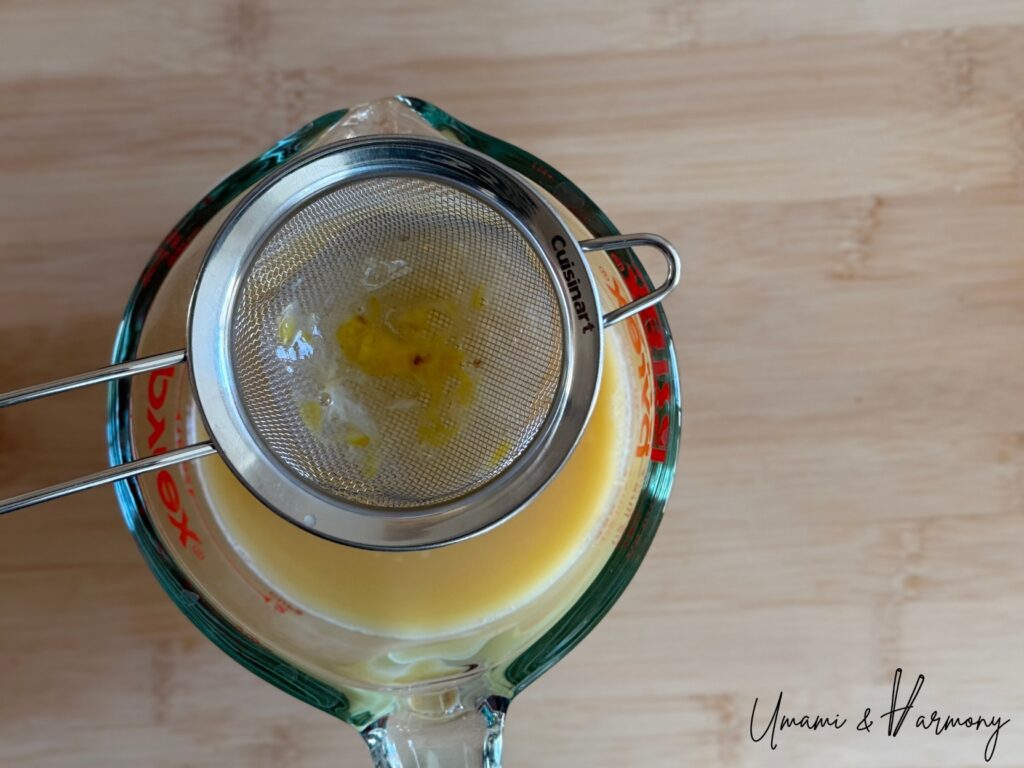
Strain the egg mixture through a fine mesh sieve or tea strainer into another bowl or container. This helps create a smooth and silky texture.
3. Add fillings and pour the mixture
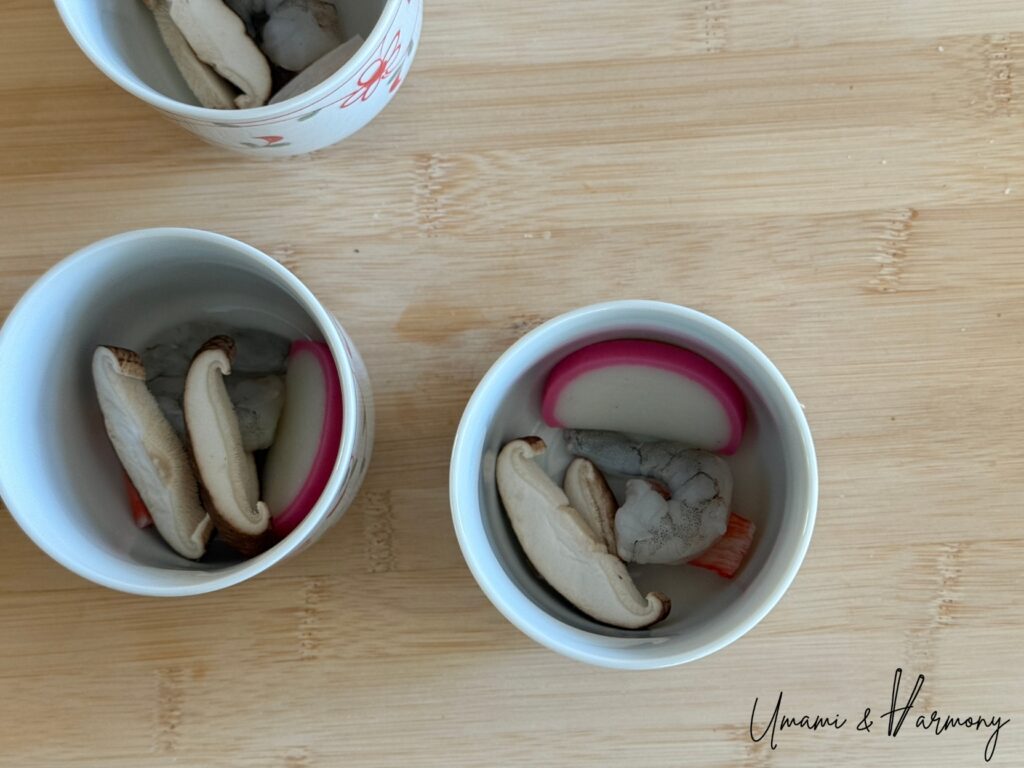
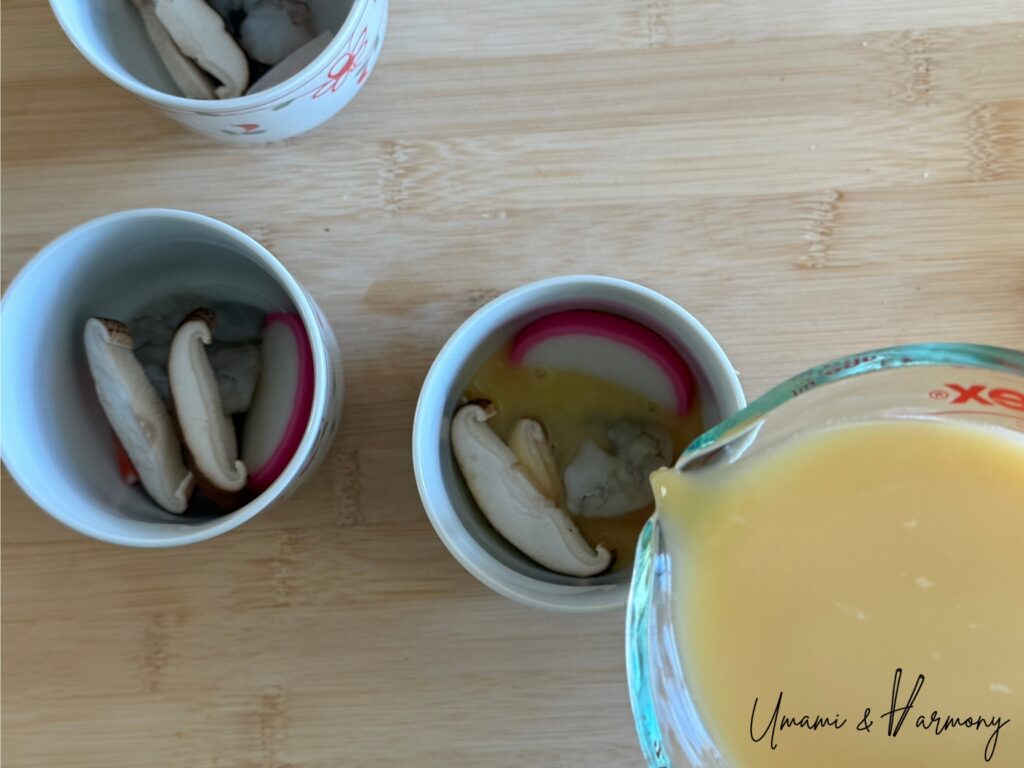
Place the raw shrimp, imitation crab sticks, kamaboko, and shiitake mushrooms into each cup. Gently pour the egg mixture into each cup, filling about 70–80% full.
4. Cover the cups
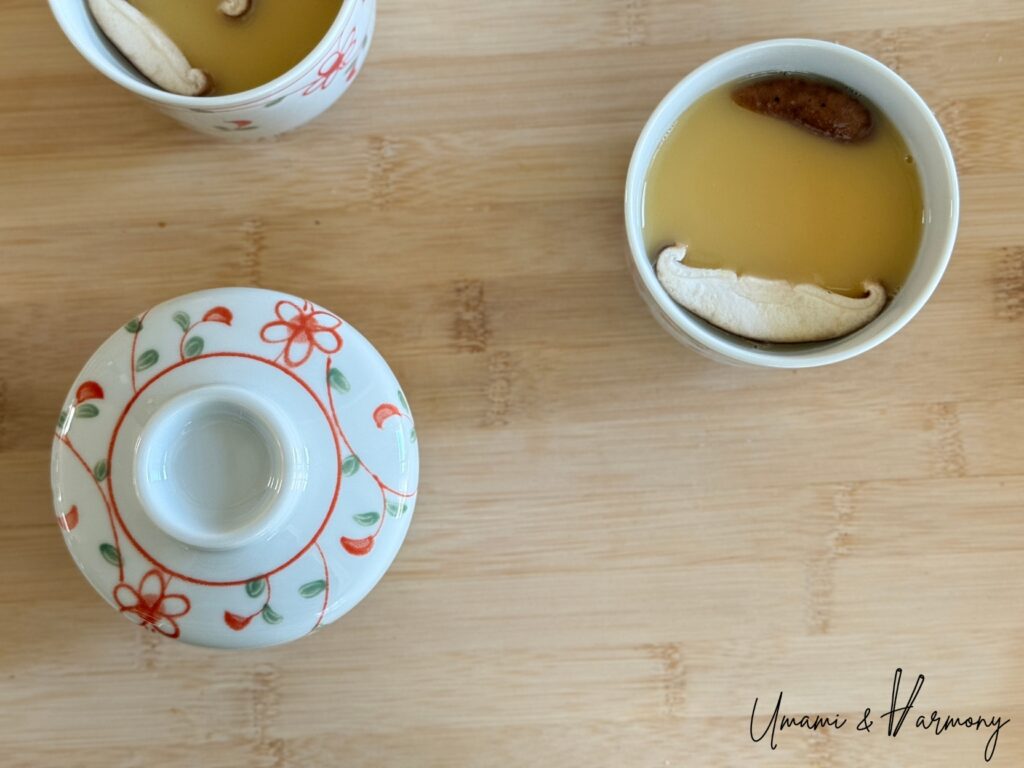
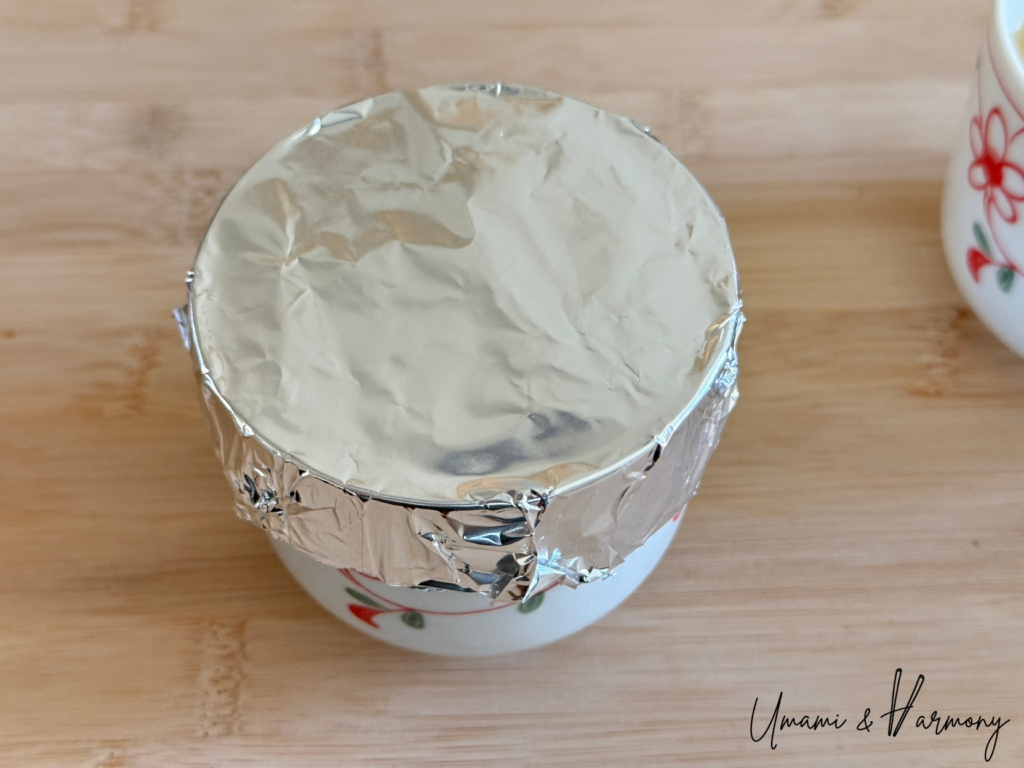
Cover each cup with a lid. If your cups do not have lids, cover them tightly with aluminum foil.
5. Steam and check for doneness
Place the cups in a steamer with boiling water. Steam over high heat for 3 minutes, then reduce to low heat and continue steaming for 13–15 minutes.
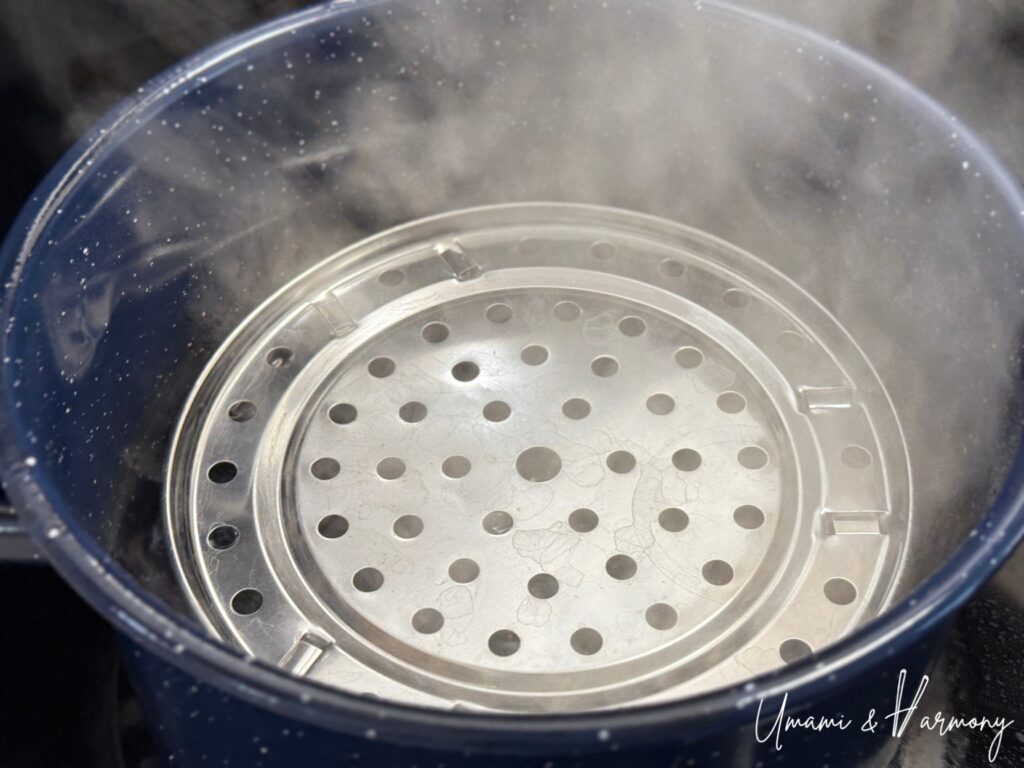
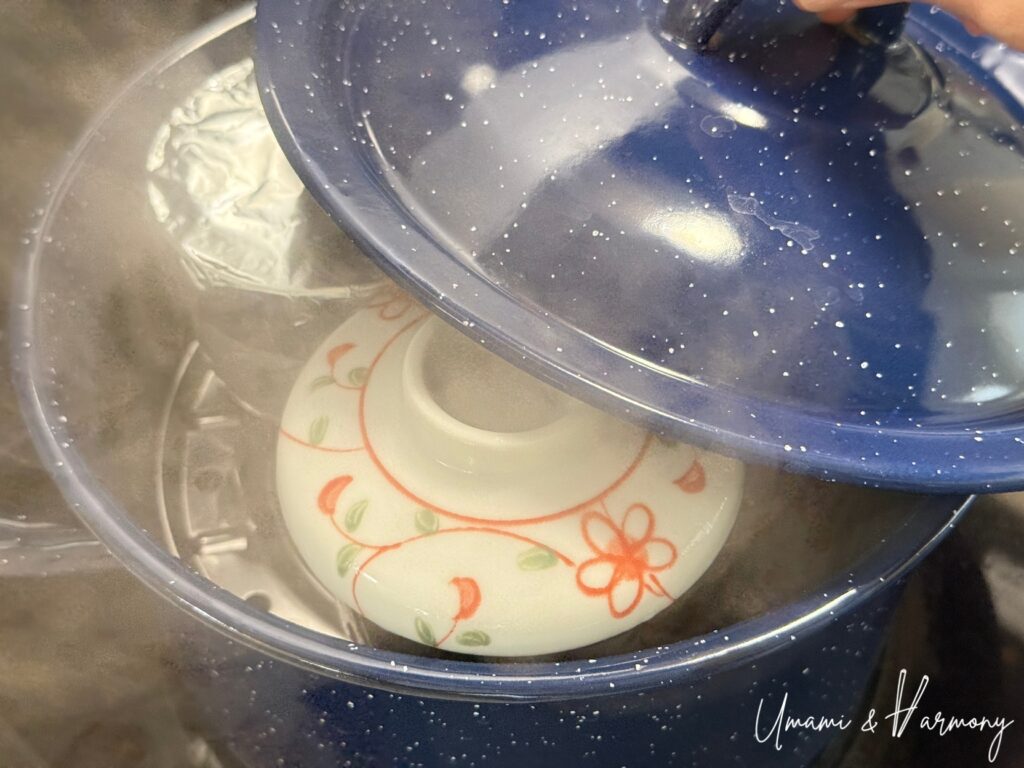
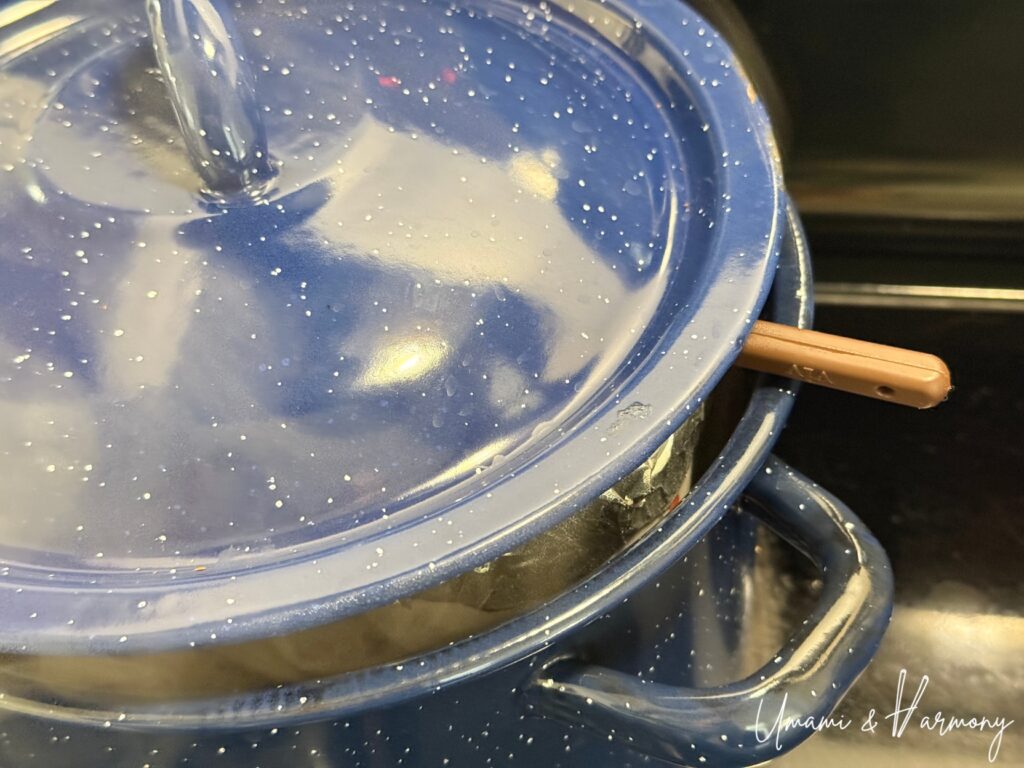
To prevent the custard from overheating and forming bubbles, slightly prop the lid open (for example, by placing a chopstick between the lid and the pot) to allow excess steam to escape.
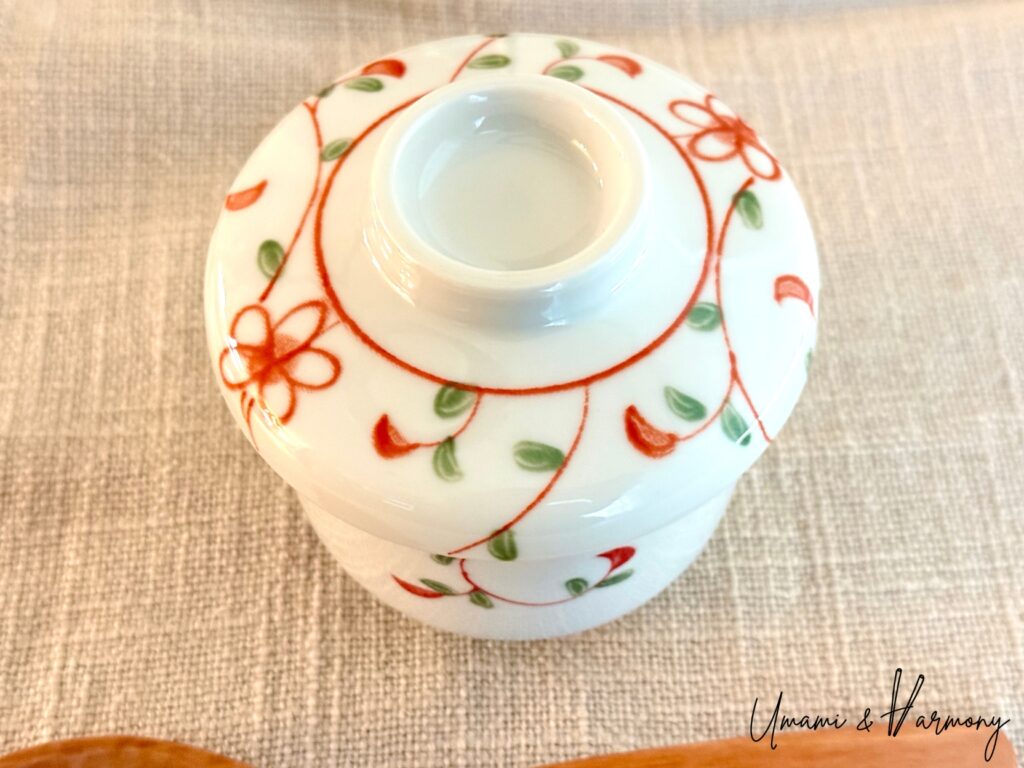
Gently tilt a cup—if the custard is set and jiggles slightly, it is done!
Recipe Tips
- Control the heat for a smooth texture: Always place the cups in the steamer after the water is fully boiling and producing steam. If the temperature is too low, the eggs won’t set properly. After the initial high heat, reduce to low heat. Cooking at too high a temperature can cause bubbles and ruin the silky texture. Slightly prop the steamer lid open with a chopstick to let excess heat escape.
- Customize the fillings: You don’t have to use all the listed ingredients. Chawanmushi is very flexible! You can try adding chicken (cut into small bite-size pieces), mushrooms, or other vegetables based on what you have.
FAQ
A. This usually happens if the steaming temperature is too low. Make sure the water is fully boiling before placing the cups in the steamer.
A. Yes, straining is highly recommended! It removes air bubbles and any lumps of egg, helping create a smooth, silky texture. However, if you’re short on time. The texture may be slightly less smooth, but it will still taste delicious.
A. Mitsuba is a traditional Japanese herb with a light, refreshing flavor similar to parsley, with a subtle hint of citrus. It is commonly used as a garnish in soups, chawanmushi, and noodle dishes.

Chawanmushi (Japanese Savory Egg Custard)
Ingredients
- 2 Eggs
- 1½ cups Dashi broth (360ml)
- 2 teaspoon Light soy sauce ( or regular soy sauce)
- ¼ teaspoon Sea salt
- 4 pieces Medium raw shrimp
- 4 pieces Imitation crab sticks (1-inch pieces)
- 4 slices Kamaboko (Japanese fish cake) (3mm slices)
- 2 Shiitake mushrooms
For garnish
- as needed Mitsuba (Japanese herb)
Instructions
- Prepare the egg mixture: Crack the eggs into a bowl and gently beat until well combined. Add the dashi broth, then mix until evenly combined. Stir in the light soy sauce and sea salt.
- Strain the mixture: Strain the egg mixture through a fine mesh sieve or tea strainer into another bowl or container. This helps create a smooth and silky texture.
- Add fillings and pour the mixture: Place the raw shrimp, imitation crab sticks, kamaboko, and shiitake mushrooms into each cup. Gently pour the egg mixture into each cup, filling about 70–80% full.
- Cover the cups: Cover each cup with a lid. If your cups do not have lids, cover them tightly with aluminum foil.
- Steam and check for doneness: Place the cups in a steamer with boiling water. Steam over high heat for 3 minutes, then reduce to low heat and continue steaming for 13–15 minutes. To prevent the custard from overheating and forming bubbles, slightly prop the lid open (for example, by placing a chopstick between the lid and the pot) to allow excess steam to escape.Gently tilt a cup—if the custard is set and jiggles slightly, it is done!
Related
Looking for other recipes like this? Try these:





Comments
No Comments