
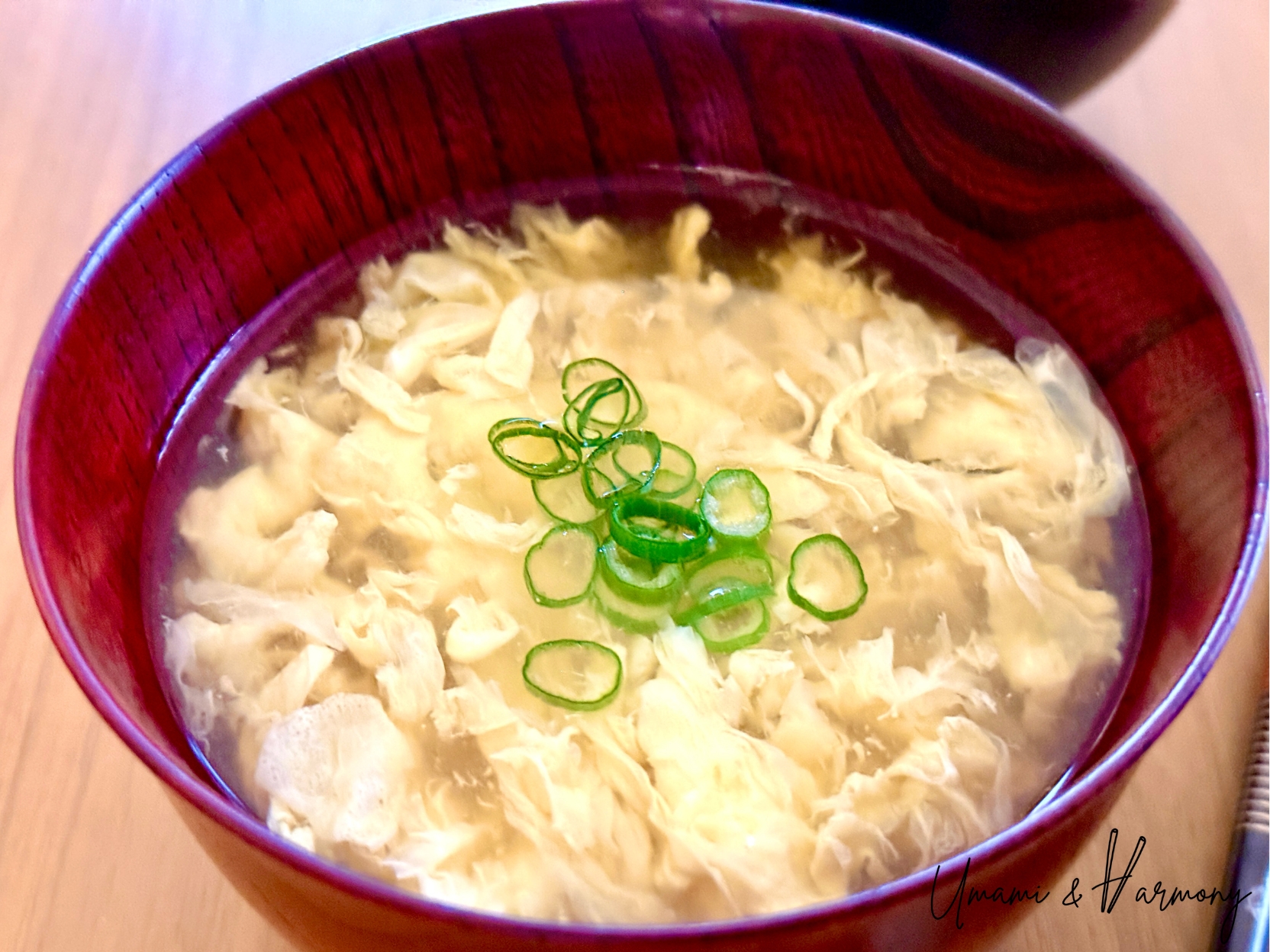
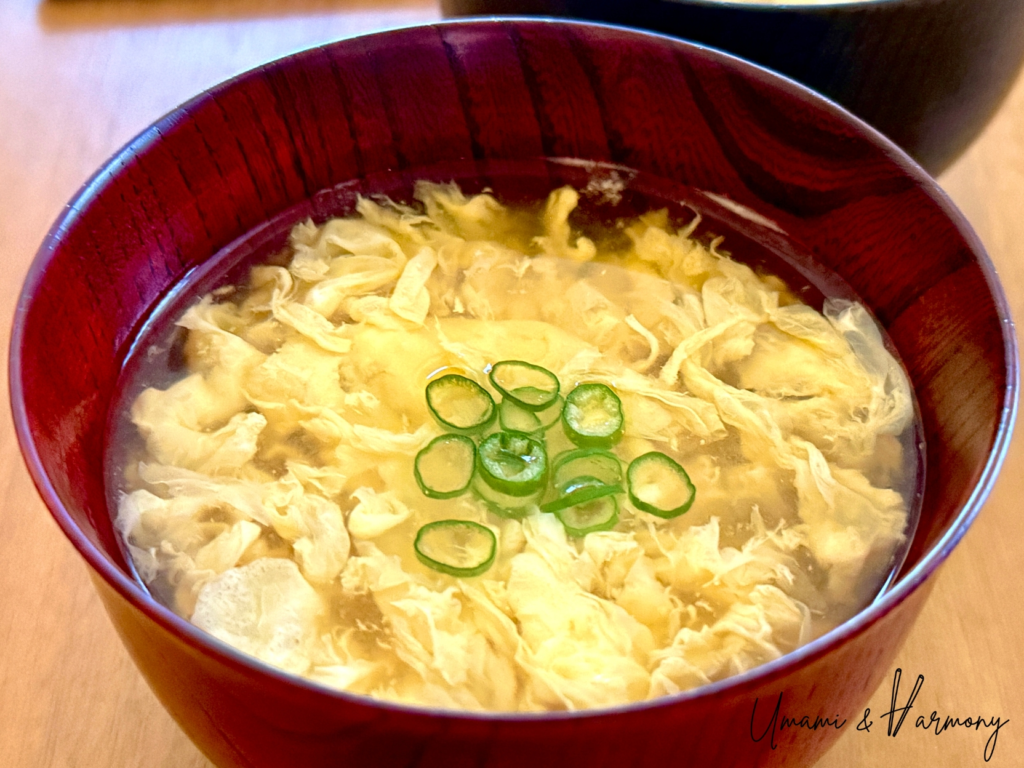
Kakitama-Jiru is a simple Japanese egg drop soup that’s light, comforting, and incredibly satisfying. Made with pantry-friendly ingredients you likely already have, this cozy soup comes together in minutes and is perfect for chilly days or when you want something gentle and nourishing. The soft, silky egg ribbons floating in savory broth make this a classic home-cooking favorite that feels soothing without being heavy.
Ingredients
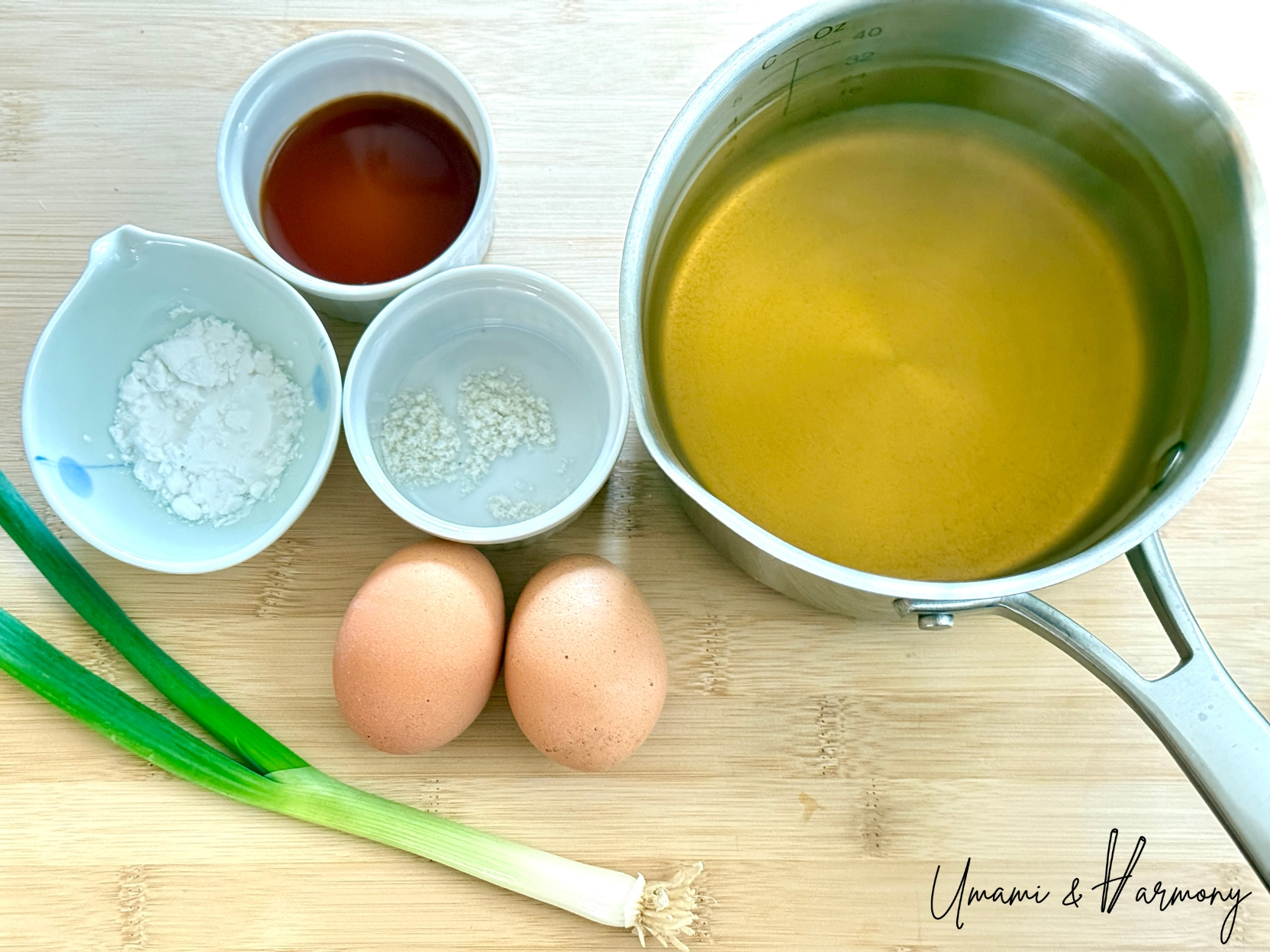
Ingredients (Serves 4-5)
- Dashi broth: 4 cups
- Eggs: 2
- Light soy sauce (or regular soy sauce): 1 ½ Tbsp
- Sea salt: ½ tsp
- Potato starch (or cornstarch): 1 tsp
- Water: 1 Tbsp
For garnishment
- Green onion: chopped (as needed)
Step-By-Step Instructions
1: Prepare the Eggs
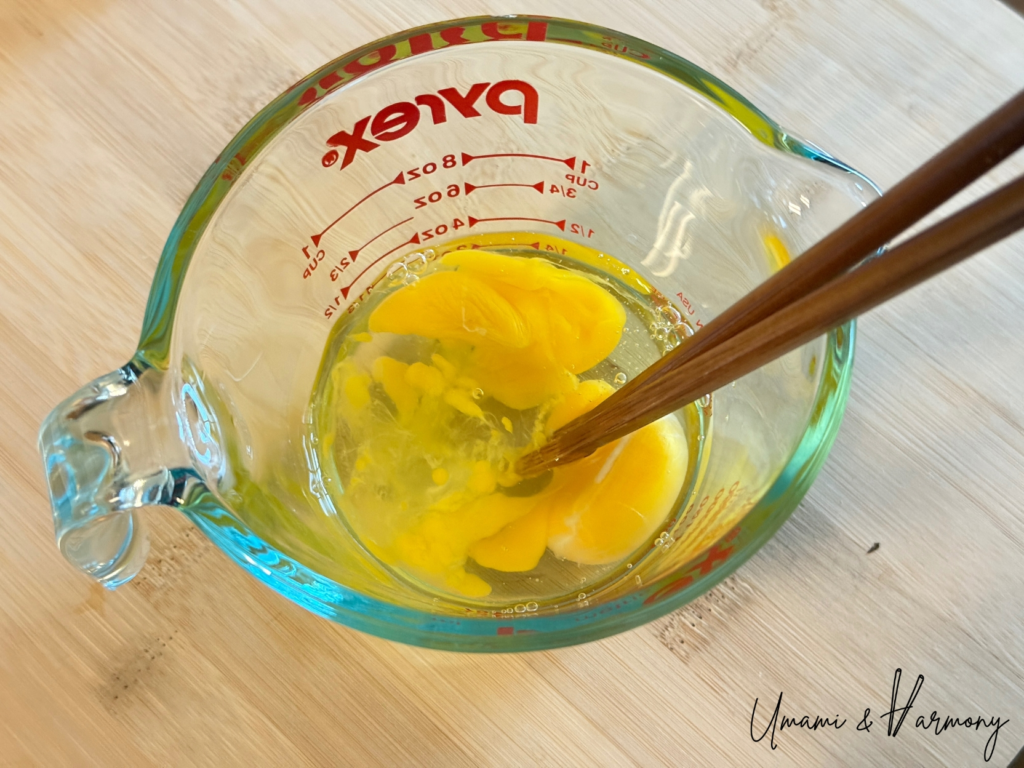
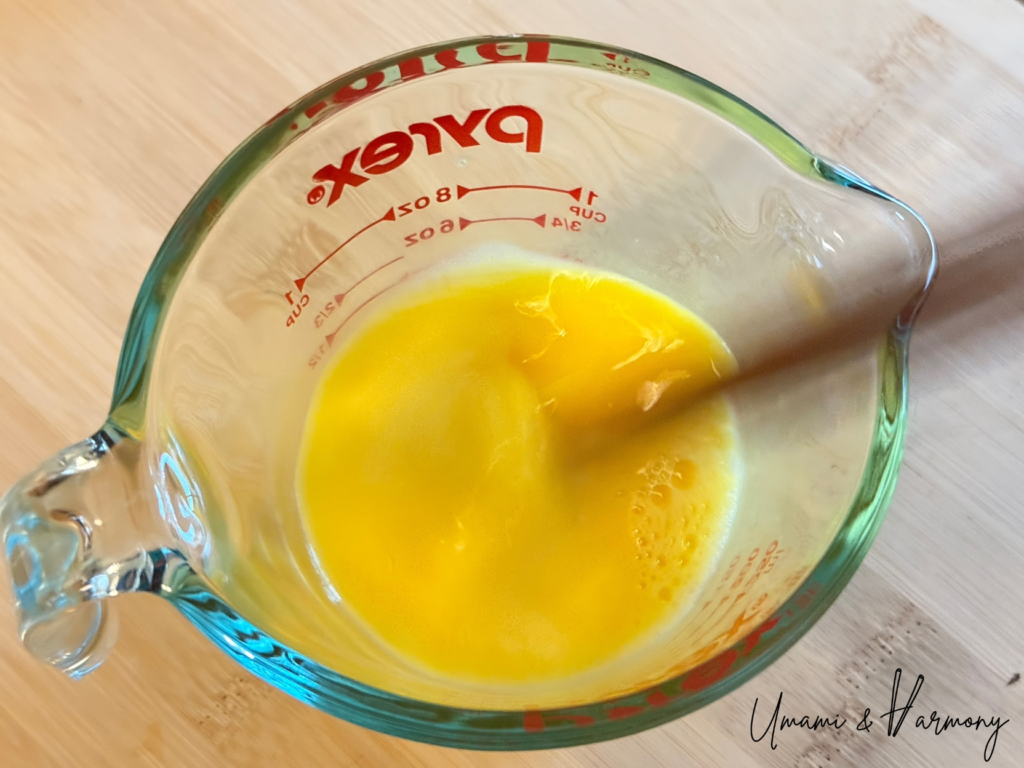
Crack the eggs into a measuring cup or bowl with a spout and gently beat them, then set aside.
2. Season the Dashi
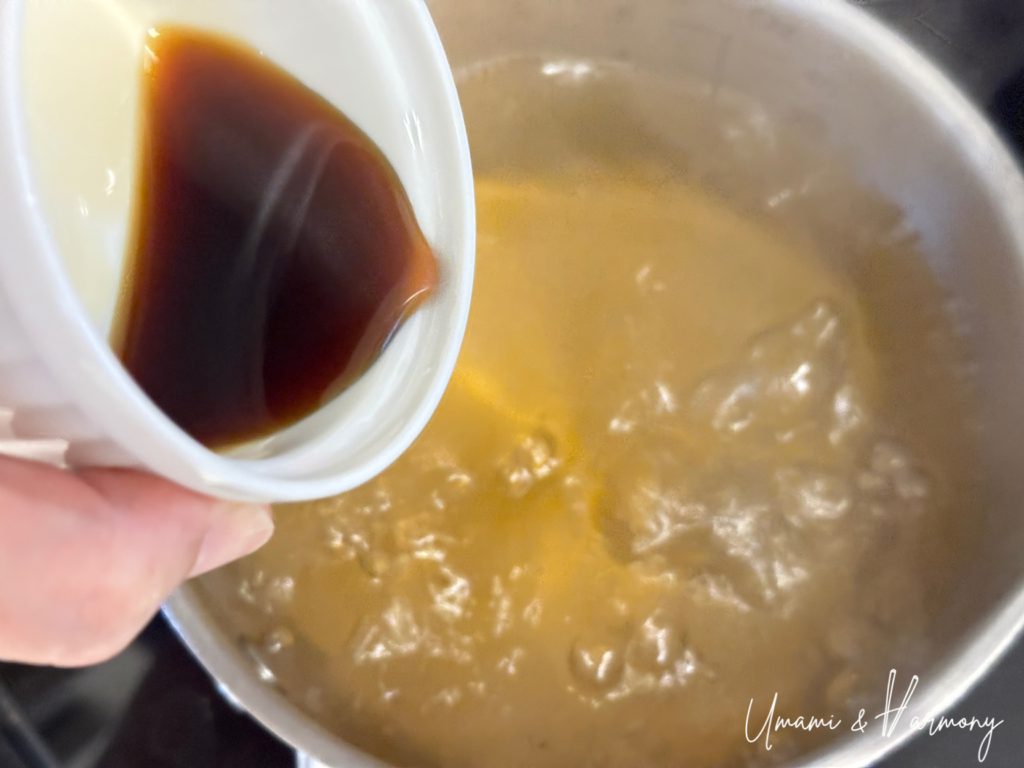
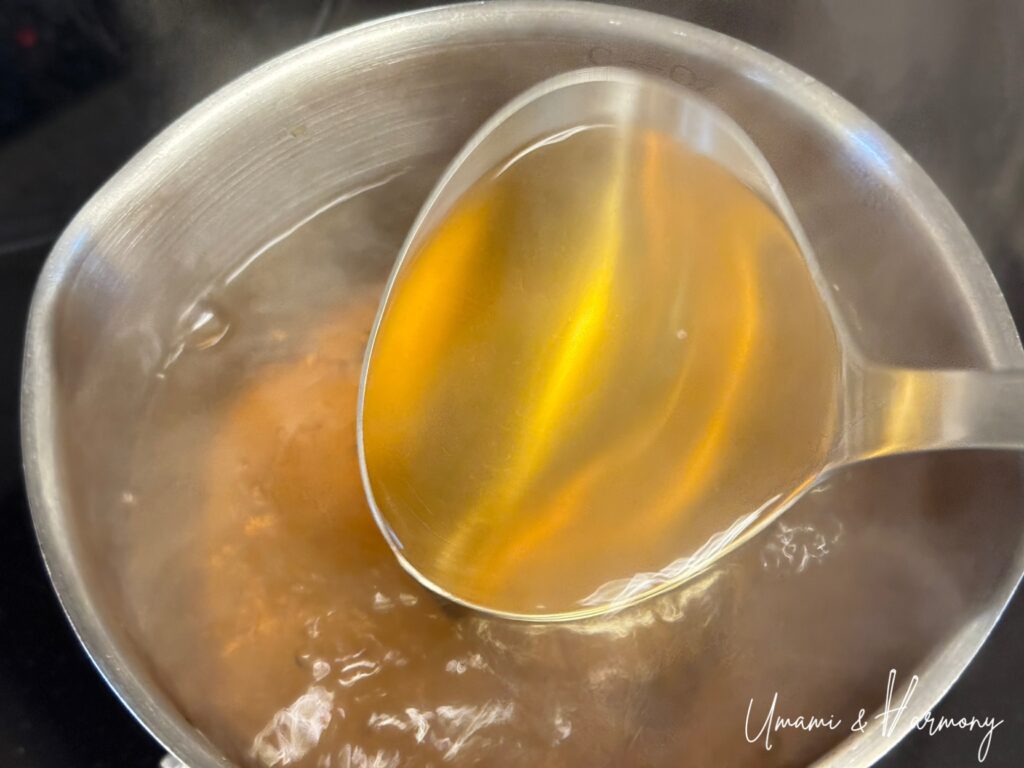
In a pot, heat the dashi broth over medium heat. Add soy sauce and sea salt, then taste and adjust the seasoning as needed.
3. Thicken the Soup
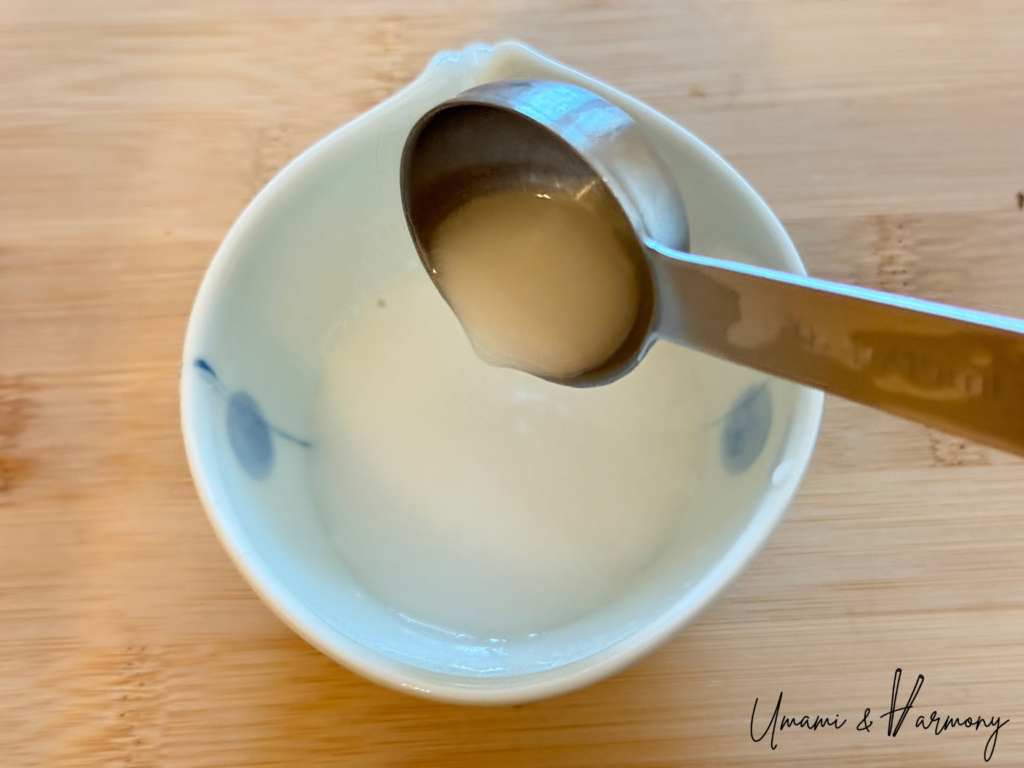
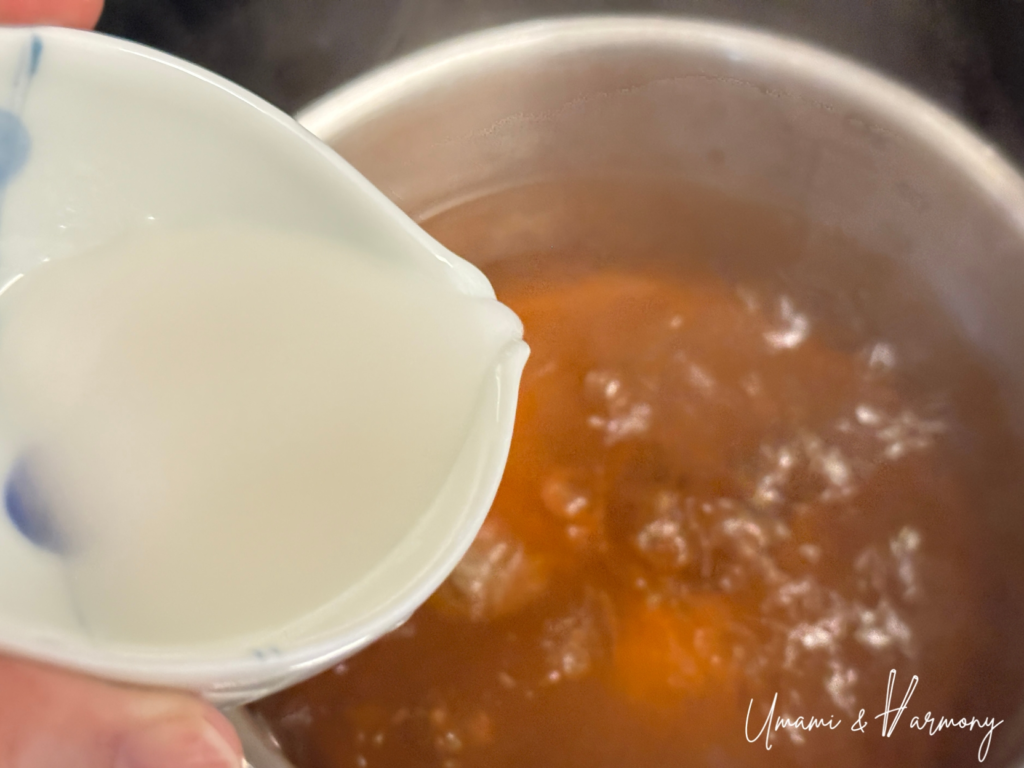
In a small bowl, combine the potato starch and water, mixing until smooth. Before the starch settles, pour the mixture into the simmering dashi while stirring from the bottom of the pot with a ladle. This creates a gentle thickness that helps form soft egg ribbons.
4. Add the Eggs
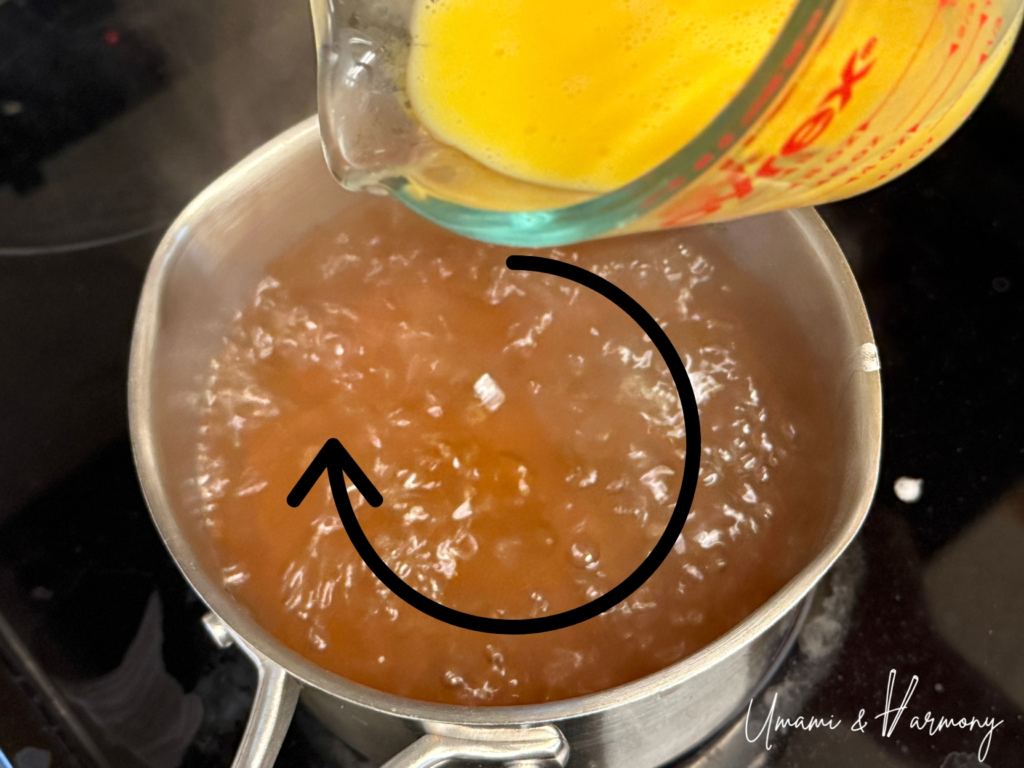
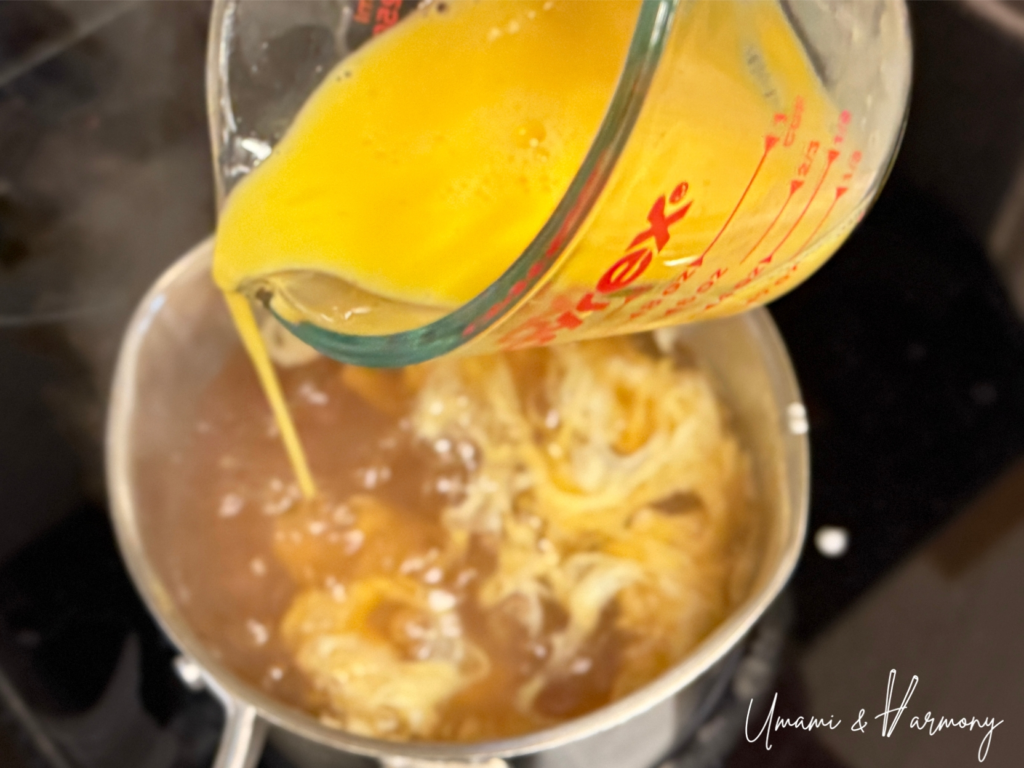
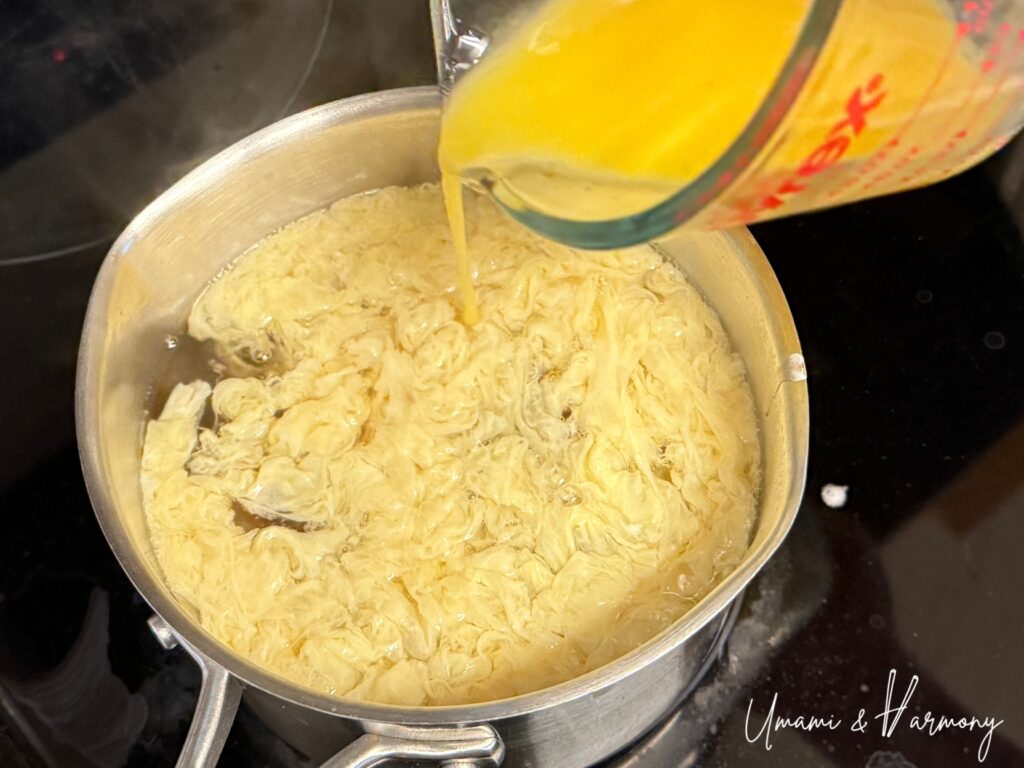
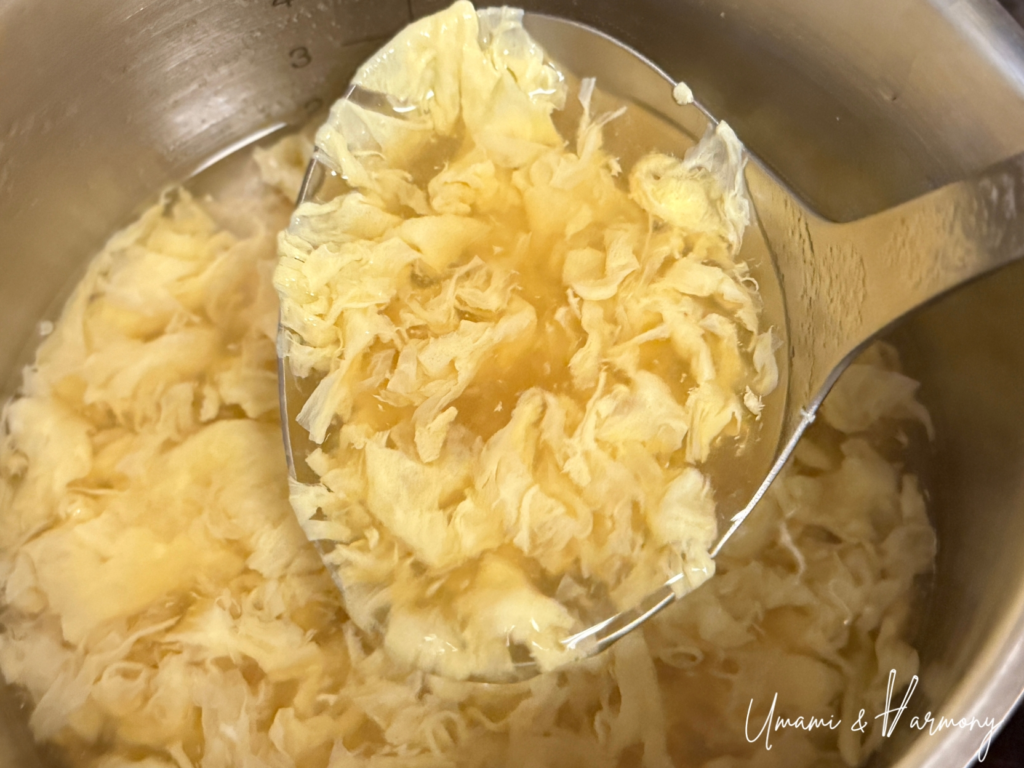
Bring the soup to a boil. Slowly pour half of the beaten eggs into the soup in a circular motion. Wait about 10 seconds until the eggs float and begin to set. Pour in the remaining eggs the same way and wait another 10 seconds, then gently stir from the bottom with a ladle. When the eggs are softly set and the soup becomes clear, remove the pot from heat.
5. Serve
Serve the soup hot, garnished with chopped green onion.
Recipe Tips
- If you’re using pre-seasoned dashi (with salt or soy sauce already added), be sure to adjust the amount of soy sauce and sea salt in the recipe. Taste the soup as you go to avoid over-seasoning.
- Wait before stirring the eggs: After pouring in the eggs, wait about 10 seconds before stirring. Then gently stir from the bottom with a ladle. This helps create soft, fluffy egg ribbons and clear soup. Stirring too soon or too quickly can make the soup cloudy and break the eggs into small pieces.
- Fully dissolve the starch: Mix the starch and water well before adding it to the soup. When pouring it in, stir the soup thoroughly with a ladle until completely incorporated. If not mixed well, the starch can form lumps, and the soup won’t thicken evenly.
FAQ
A. Yes, cornstarch works well too. Potato starch is more commonly used in Japanese home cooking, but it can be harder to find in the U.S. (usually available at Japanese or Asian grocery stores). Either option works perfectly for this recipe.
A. It’s best enjoyed right after cooking. Reheating can overcook the eggs and change the texture of eggs.
Japanese Egg Drop Soup (Kakitama-Jiru)
Ingredients
- 4 cups Dashi broth
- 1 ½ Tbsp Light soy sauce (or regular soy sauce)
- ½ teaspoon Sea salt
- 1 teaspoon Potato starch (or cornstarch)
- 1 tablespoon Water
For garnishment
- Green onion (chopped) as needed
Instructions
- Prepare the Eggs: Crack the eggs into a measuring cup or bowl with a spout and gently beat them, then set aside.
- Season the Dashi: In a pot, heat the dashi broth over medium heat. Add soy sauce and sea salt, then taste and adjust the seasoning as needed.
- Thicken the Soup: In a small bowl, combine the potato starch and water, mixing until smooth. Before the starch settles, pour the mixture into the simmering dashi while stirring from the bottom of the pot with a ladle. This creates a gentle thickness that helps form soft egg ribbons.
- Add the Eggs: Bring the soup to a boil. Slowly pour half of the beaten eggs into the soup in a circular motion. Wait about 10 seconds until the eggs float and begin to set. Pour in the remaining eggs the same way and wait another 10 seconds, then gently stir from the bottom with a ladle. When the eggs are softly set and the soup becomes clear, remove the pot from heat.
- Serve: Serve the soup hot, garnished with chopped green onion.
Related
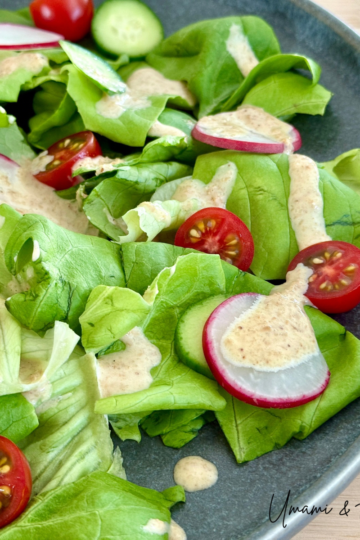
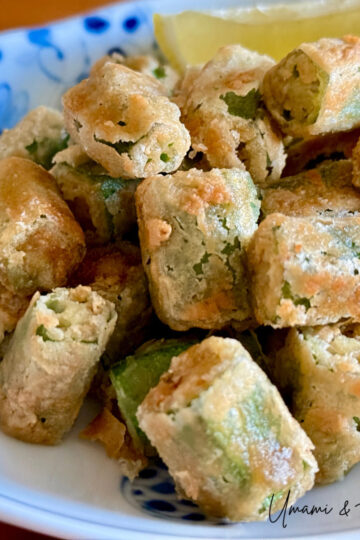
Looking for other recipes like this? Try these:



Comments
No Comments